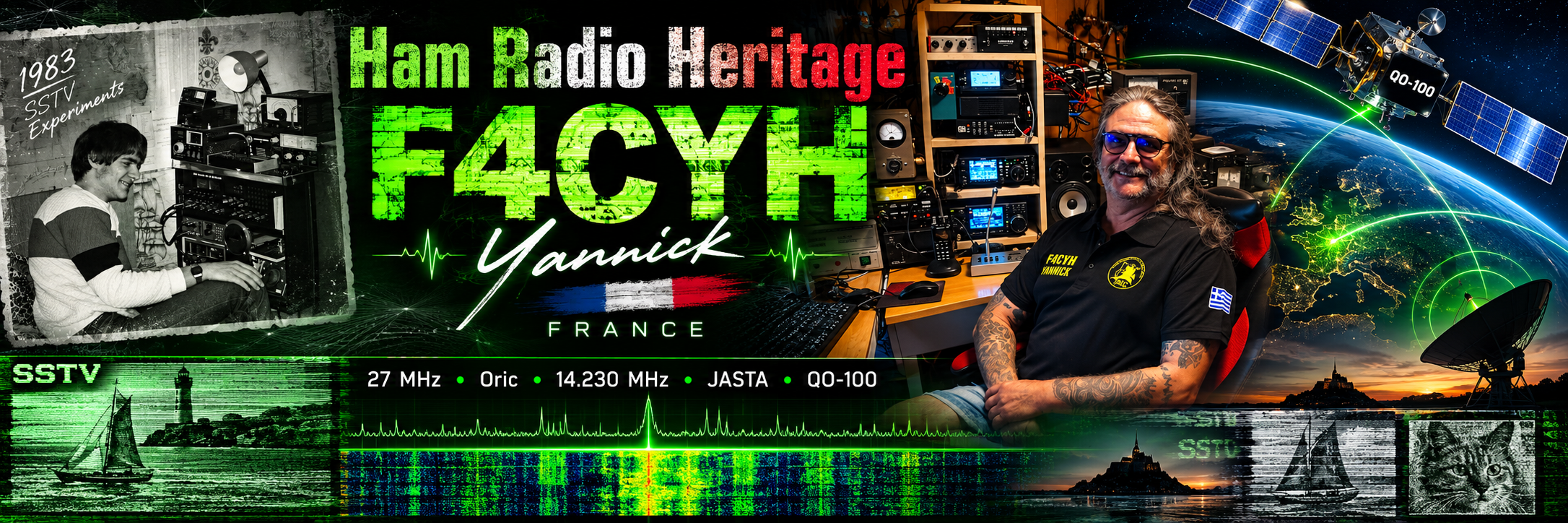
Ham Radio Heritage
Yannick, F4CYH
From 27 MHz and Cassette-Loaded SSTV to 14.230 MHz and QO-100
Long before modern computers, fast internet connections and digital SDR displays, Yannick was already fascinated by pictures travelling over radio. His path began on 27 MHz with an Oric computer and software loaded from cassette, and eventually led to amateur radio, 14.230 MHz, JASTA, experiments on other bands, QO-100 and friendships that lasted for years.
Before the Internet: SSTV on 27 MHz
Yannick's first experience with SSTV came through the 27 MHz scene. At the time he used the CB callsign 14V487 and experimented first with an Oric 1 and later an Oric Atmos.
The software was loaded from cassette. There was no hard disk and no modern image archive waiting in a folder. Receiving a picture meant waiting for the program to load, listening to the signal and watching the image slowly appear.
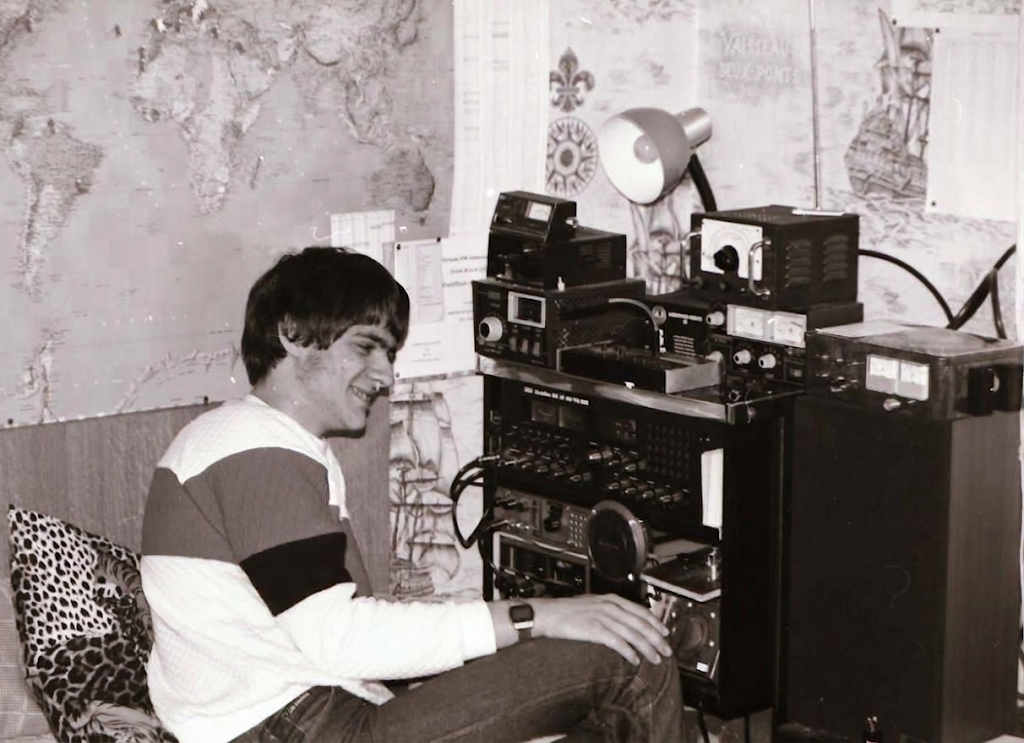
Those early contacts included other SSTV enthusiasts on 27 MHz, among them operators such as 14V105 Hubert. The equipment was simple, but the fascination was already there.
From VHF to the International SSTV Frequency
After becoming a licensed radio amateur, Yannick first tried SSTV on VHF. Local activity in France was limited, however, and that pushed him toward HF.
The destination was obvious: 14.230 MHz, the long-established international meeting place for analogue SSTV on 20 metres.
From there SSTV became much more than a technical mode. It became a way to meet people repeatedly, recognise their pictures and callsigns, and slowly build friendships across borders.
Friendships Through SSTV
Looking through Yannick's selected images, one theme appears again and again: the pictures are not just reception reports. They are memories of people.
Some contacts became particularly close friendships. Yannick especially remembers Pino, IT9DOO, and Terry, EA3EWO. Both are now Silent Keys, but their callsigns and pictures remain part of his SSTV history.
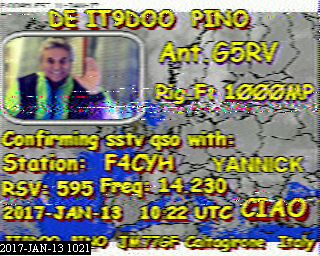
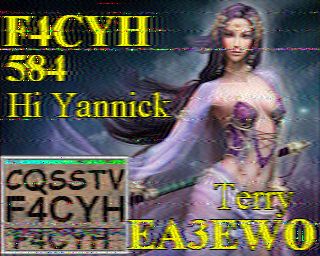
For Yannick, this is one of the strongest parts of SSTV. A picture can carry a callsign, a greeting, a face, a joke or simply a familiar style. Years later, those small 320-pixel images can still bring back the person behind the signal.
Friends Still Heard on the Bands
Several long-standing friendships remain active today. Yannick particularly mentions Tony, SV2ROC, Driss, 7X3WPL and Victor, RA3NO.
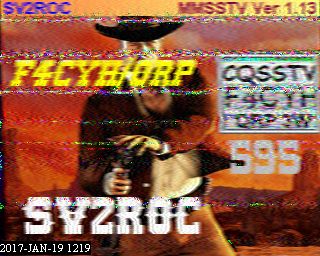
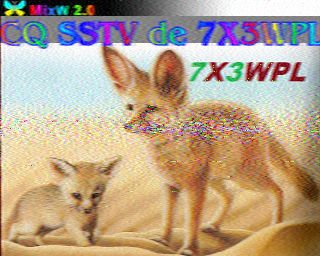
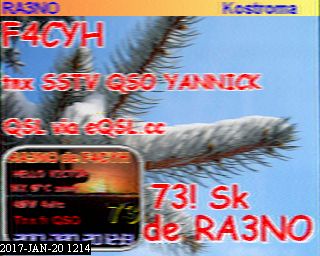
Yannick also mentions G8IC Mike, Andy G0MSA, and Eivind OZ1QX among the most frequently contacted operators in this international SSTV community (not to mention the others :) ). A special mention goes to John “Sandy” Pimlott G8IDE (SK) as well. Special mention also goes to SWLs, such as Max, PA11246 from Almere, and Phil, MA3107 from Manchester (SK)—and of course all the others who send him QSL cards.
Not Only 20 Metres
Although 14.230 MHz became his main SSTV meeting place, Yannick has never regarded SSTV as a one-band mode. He has used 80 metres and has also experimented with activity away from the traditional SSTV channels.
One example was an attempt to promote N-SSTV on the WARC bands. The image below is a CQ from G1BTF on 17 metres, part of those experiments.
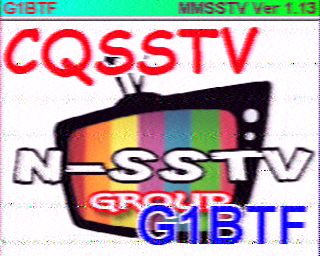
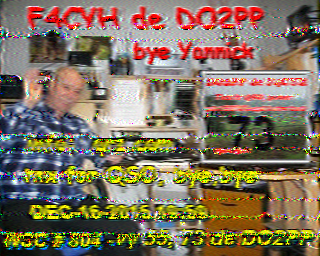
He also sent an example from DO2PP on 80 metres, showing another side of SSTV away from the crowded 20-metre frequency.
The French Early Birds
Some SSTV activity becomes a routine. Yannick also remembers the French Early Birds, a morning SSTV QSO on 80 metres.
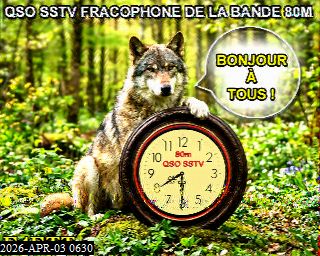
These regular meetings are a reminder that amateur radio is often built around familiar voices, signals and pictures returning day after day.
JASTA, Quebec and the Wider SSTV Community
Yannick also takes part, from time to time, in the activity surrounding JASTA. He describes one of the pictures he selected as a “typical JASTA picture” between the well-known UT5EPP and himself.
The annual activity can make the area around 14.230 MHz especially lively, and for Yannick it is another part of the international SSTV culture.
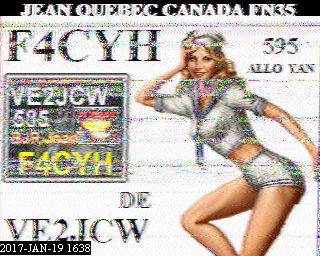
Across the Atlantic there are also familiar contacts. Yannick calls VE2JCW his “Quebec cousin”.
From Analogue Pictures to a Modern Linux Station
The technology around SSTV has changed enormously since Yannick's first Oric computer. The cassette has disappeared, displays have become larger, SDR software can show an entire band, and digital tools can connect radio, logging and decoding on one screen.
But the frequency visible in Yannick's current setup is still familiar: 14.230 MHz.
He also experiments with analogue SSTV through QO-100, where the satellite environment gives room for slower SSTV modes. Yannick also mentions Jaap, PA3EKI, who is often active on QO-100.
A special place in Yannick's QO-100 memories belongs to Alain, ON7ATV (SK). Yannick remembers Alain as a very important member of the SSTV community, especially on QO-100, where Alain helped him and became part of those friendships built through Slow Scan Television.
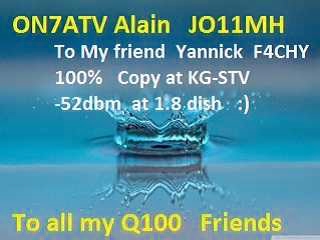
For Yannick, the equipment may change, but the attraction of sending and receiving pictures by radio — and the friendships behind those pictures — remains.
SSTV Is Still the Favourite
Yannick has also used modes such as FT8 and FT4 and is learning CW, but SSTV remains his favourite mode.
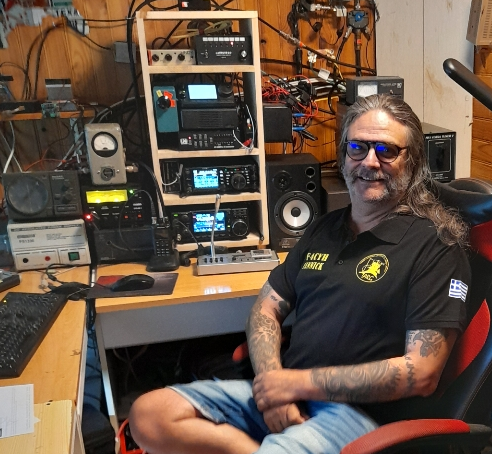
He is less continuously present than in some earlier periods, yet he still tries to call CQ regularly. What matters most is not simply making another contact, but seeing who answers, recognising an old callsign and continuing a relationship that may have started years before.
The pictures are small, but the memories behind them can be very large.
The SlowscanTV Connection
F4CYH is one of the 20-metre SSTV receiving stations followed by SlowscanTV. Yannick's station in Sarry, France, is listed with locator JN26BH.
His story shows exactly why preserving SSTV matters. A live image tells us what is happening now; an archive can show what happened last month; but the personal story explains why those callsigns and pictures mattered in the first place.
Photo Credits & Copyright
The SSTV images and operating screenshot on this page were selected and provided by Yannick, F4CYH, for his Ham Radio Heritage story. Copyright of individual transmitted images remains with the respective original creators and operators. Images may not be reproduced, copied or republished without permission.
Story based on Yannick's own account of his SSTV history, the friendships he described to SlowscanTV, and the images he selected to accompany those memories.