Ham Radio Heritage
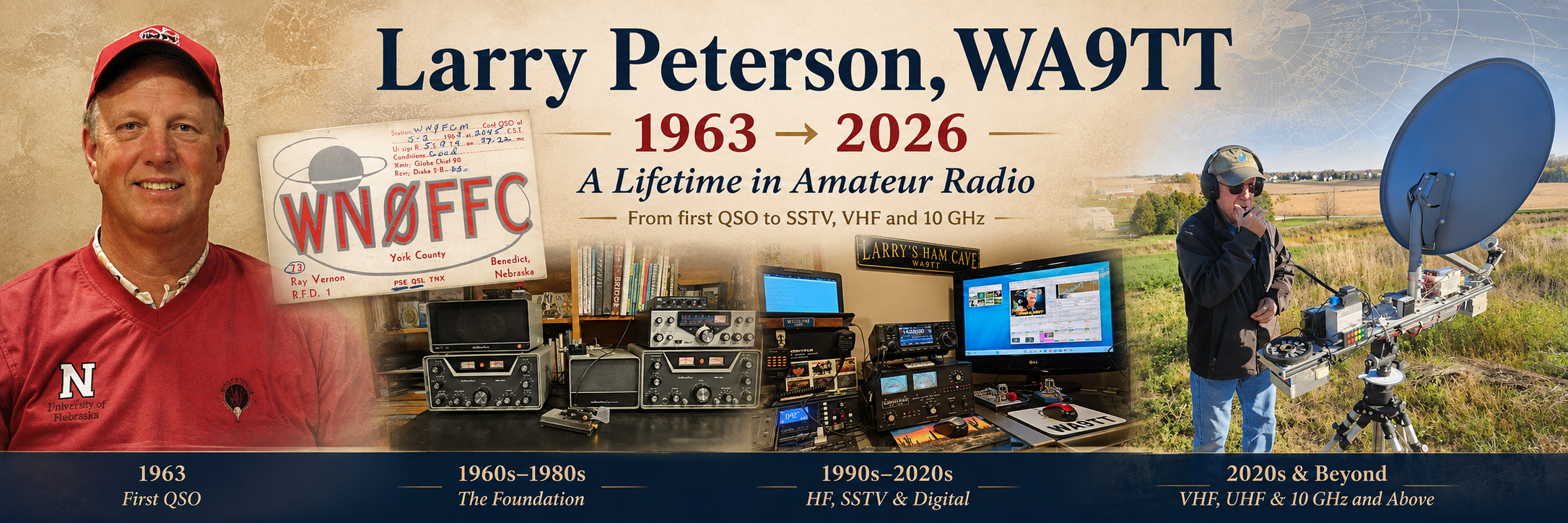
Larry Peterson, WA9TT
More Than Six Decades of Amateur Radio
From a farm in rural Nebraska and a nervous first CW contact in 1963 to Slow Scan Television, VHF, POTA and microwave communication — this is the story of a lifetime shaped by radio, curiosity and friendship.
A Twelve-Year-Old Boy and a Very Tall Tower
Some amateur-radio stories begin with an expensive transceiver, a large antenna system or a carefully planned station.
Larry Peterson's story began much more simply.
It began with a twelve-year-old boy living on a farm in rural Nebraska. The year was 1963.
There were no personal computers, no software-defined radios and no internet. Amateur radio was something you discovered by listening, building, experimenting — and often through someone willing to show you the way.
For Larry, that first introduction came through a friend from grade school. About five miles from the family farm stood a 1,500-foot television tower belonging to KOLN television. The station's chief engineer, Willard Peterson, was offering a Novice amateur-radio class.
Larry joined.
He could hardly have known it at the time, but that decision would begin a journey through amateur radio lasting more than sixty years.
Learning the Code
Passing the Novice examination in those days meant learning Morse code. Willard Peterson worked together with Johnny O'Dell, who taught the students the code.
Larry remembers that the code was taught at an excruciatingly slow speed. At such a pace it was tempting to count individual dots and dashes rather than hear each character as a complete sound.
But there was one hurdle that had to be crossed: five words per minute.
Larry crossed it. He passed the test and earned his Novice licence. A new world had opened.
Building a Station
Having a licence did not automatically mean having a station. For a young boy growing up on a farm, equipment had to be obtained carefully — or built by hand.
Larry constructed his own 50-watt crystal-controlled CW transmitter. There was no simply turning a dial to whatever transmit frequency you wanted. A crystal determined where the transmitter operated. In the language of the time, Larry was “rock bound.”
His father helped make the receiving side possible by buying him a Hammarlund HQ-110 receiver from World Radio Laboratories in Council Bluffs, Iowa — one of the great amateur-radio “candy stores” of the era.
Now the young operator had the essentials: a licence, a transmitter, a receiver and an antenna connecting a Nebraska farm with an invisible world far beyond it.
All that remained was perhaps the hardest part.
He had to call someone.
May 2, 1963 — The First QSO
On May 2, 1963, Larry sat down at his station and prepared to transmit. He was twelve years old — and he was nervous.
Years later he would remember making that first contact with what he described as “great nervousness and a weak fist.”
Anyone who has ever made a first CW contact will understand the feeling. You practise the characters. You know your callsign. You know what you are supposed to send.
Then somebody answers.
Suddenly this is no longer practice. There is another human being listening.
Larry called CQ using one of the few crystals available to him, transmitting around 3.722 Mc, as megahertz was commonly written at the time.
Because the transmitter was crystal controlled, he could not simply move onto the other station's transmit frequency. Instead, he searched up and down the 80-metre band with the receiver.
At approximately 3.718 Mc, he found him: WN0FFC, Ray Vernon in Benedict, Nebraska.
The contact was made.
A young amateur on a Nebraska farm had sent his signal into the air — and somebody had answered.
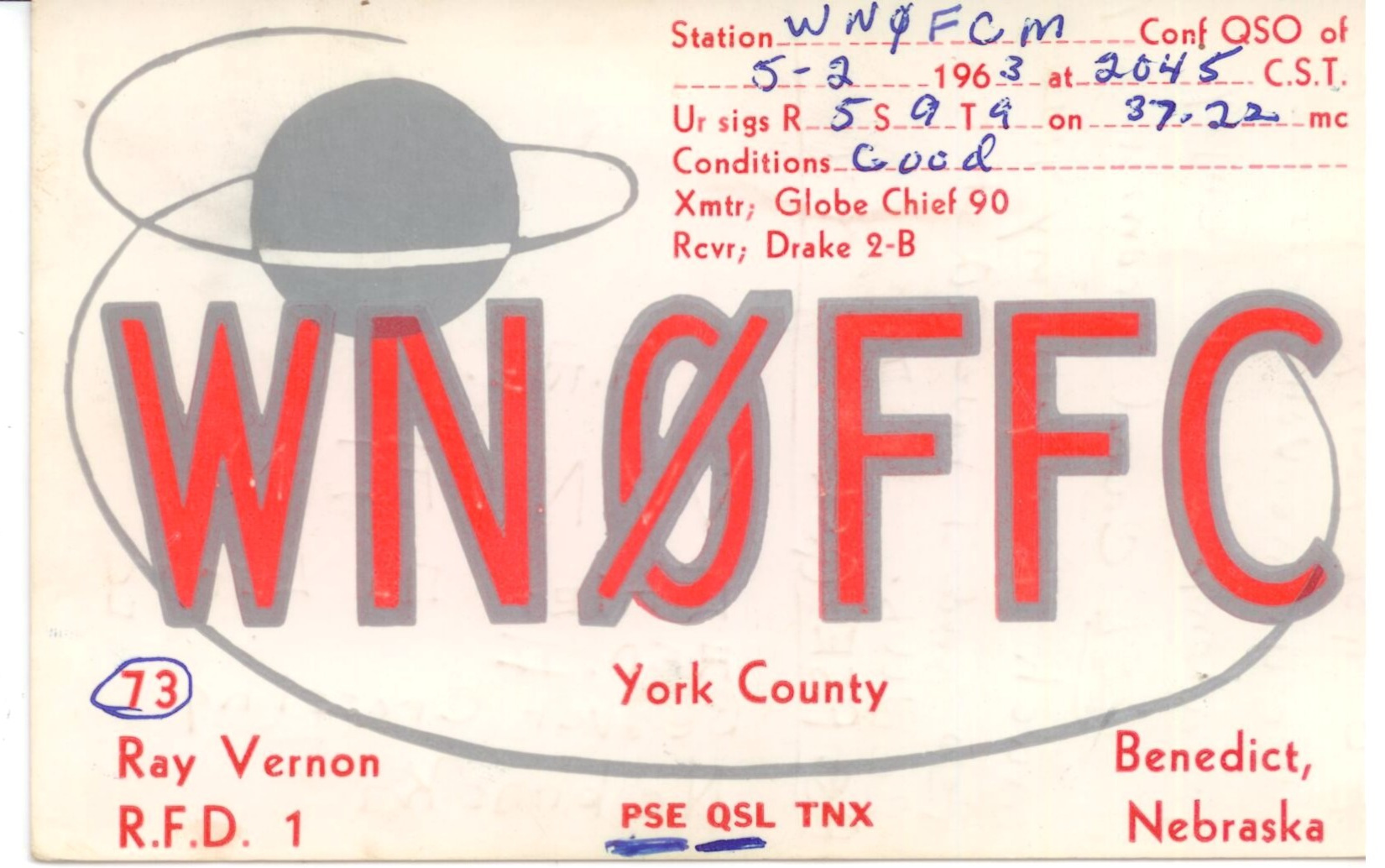
More than six decades later, Larry still has that QSL card. It is more than confirmation of a radio contact.
It marks the beginning of a lifetime.
From Novice to General
In 1963 a Novice licence was not something an amateur could simply keep indefinitely. Larry had one year, so he kept learning.
Before that first year was over he upgraded to the General class licence. With the upgrade came another small but meaningful change: his Novice callsign became WA9FCM.
Amateur radio itself was very different. CW was everywhere. AM voice was common, and a relatively small number of amateurs experimented with RTTY.
Slow Scan Television existed, but Larry had not yet encountered it. Even if he had, such equipment would have been a luxury far beyond what a young farm boy could realistically afford.
That chapter would come much later.
Radio Becomes Part of a Life
Years passed. Radio technology changed. Larry changed with it.
By 1976, his commitment to amateur radio had become permanent in another way when he became an ARRL Life Member.
The family had meanwhile moved to Wisconsin, requiring a callsign change under the callsign system of the time. WA9FCM became WB9KMW. That callsign stayed with Larry for many years and can still be found on memorabilia in his shack today.
Approximately a decade ago another callsign became available to him. A much shorter one: WA9TT.
Different callsigns. Different radios. Different decades. But the operator behind them remained the same.
Discovering Slow Scan Television
Almost half a century after that first CW contact, another mode captured Larry's imagination in a particularly strong way: Slow Scan Television.
SSTV combines two things radio amateurs have always loved: communication and experimentation. A voice can disappear as soon as the conversation ends, but an SSTV transmission leaves behind an image — a picture that has travelled through noise, fading and interference before appearing line by line on another operator's screen.
Larry became deeply involved.
Over the years he maintained a major collection of SSTV cameras on his website and wrote tutorials to help other radio amateurs understand and use the mode. Amateurs from around the world contacted him about the information he shared.
His knowledge eventually reached one of amateur radio's best-known reference works: Larry is the author of the SSTV section in the ARRL Handbook.
“I have had hams from all over the world contact me about the information I have shared.”
— Larry Peterson, WA9TT14.230 MHz — Keeping Watch
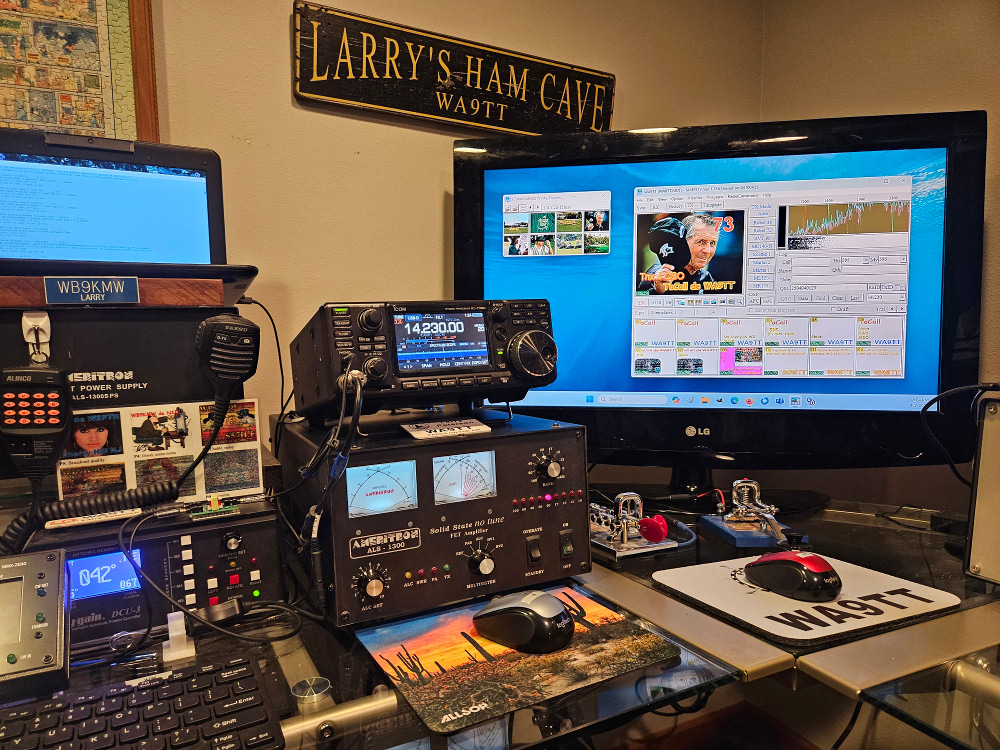
Today Larry's HF station includes an Icom IC-7300 and an Ameritron ALS-1300 amplifier.
One frequency has a special place in the shack: 14.230 MHz.
Larry normally monitors the 20-metre SSTV frequency around the clock, posting received images to his SSTV cam. It is a modern continuation of something that began with that Hammarlund receiver in 1963: listening to the band and wondering who might appear next.
He also manages a local monthly 2-metre SSTV net over the local club repeater — another way of keeping the mode active and introducing people to the simple pleasure of sending pictures by radio.
One Small Step — and a Place in SSTV History
Slow Scan Television has a connection with one of the most famous moments in modern history.
When Apollo 11 landed the first humans on the Moon in July 1969, the television system used for the first lunar surface images was a slow-scan television system. The pictures were unlike modern high-definition video, but they allowed people on Earth to witness a human being stepping onto another world.
Larry later found a very personal way to mark that history.
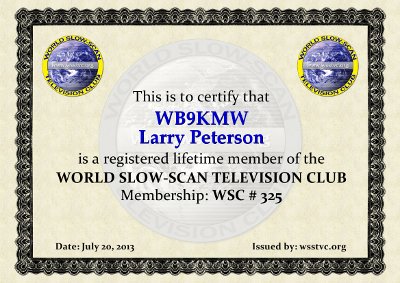
On July 20, 2013 — exactly 44 years after the Apollo 11 lunar landing — he became lifetime member #325 of the World Slow-Scan Television Club.
Later that evening he made another commemorative contact, working WA4DXP, a special-event station in Huntsville, Alabama, celebrating the 44th anniversary of Apollo 11.
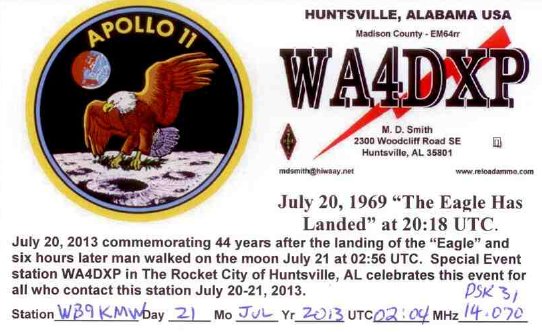
For someone who had started with a home-built CW transmitter six years before Armstrong walked on the Moon, it was a fitting connection between the early years of radio, the history of SSTV and a lifetime on the air.
More Than SSTV
SSTV may be an important part of Larry's story, but it has never been the whole story.
His shack reflects a radio amateur who has always been interested in what else might be possible: HF, VHF, UHF, digital modes, CW, portable operation, contesting and the microwave bands.
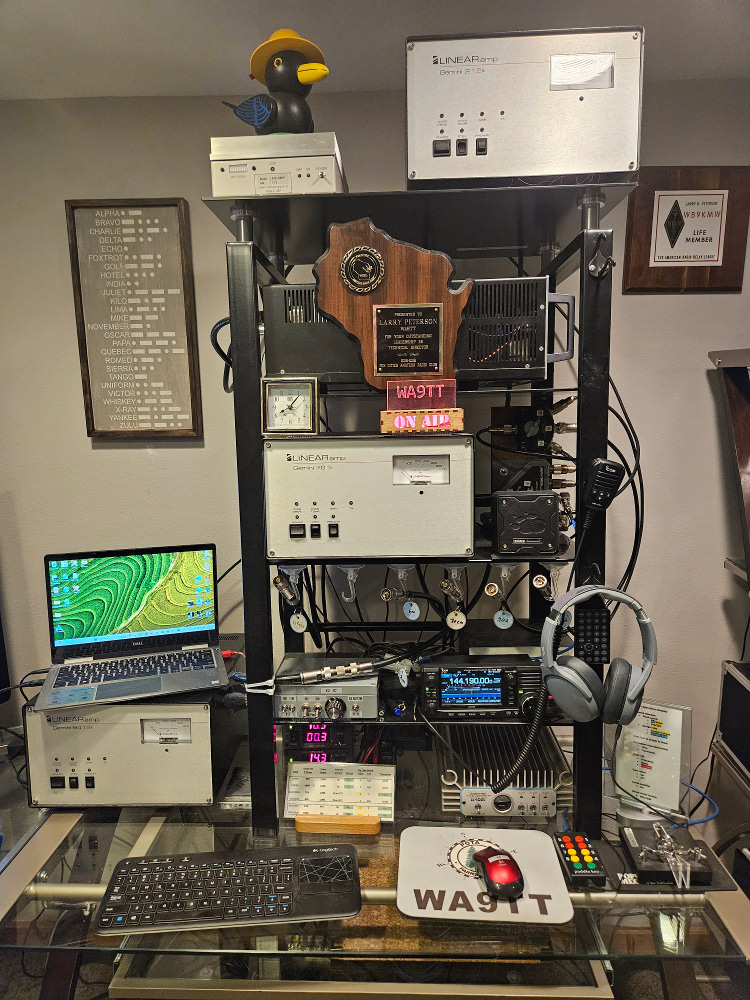
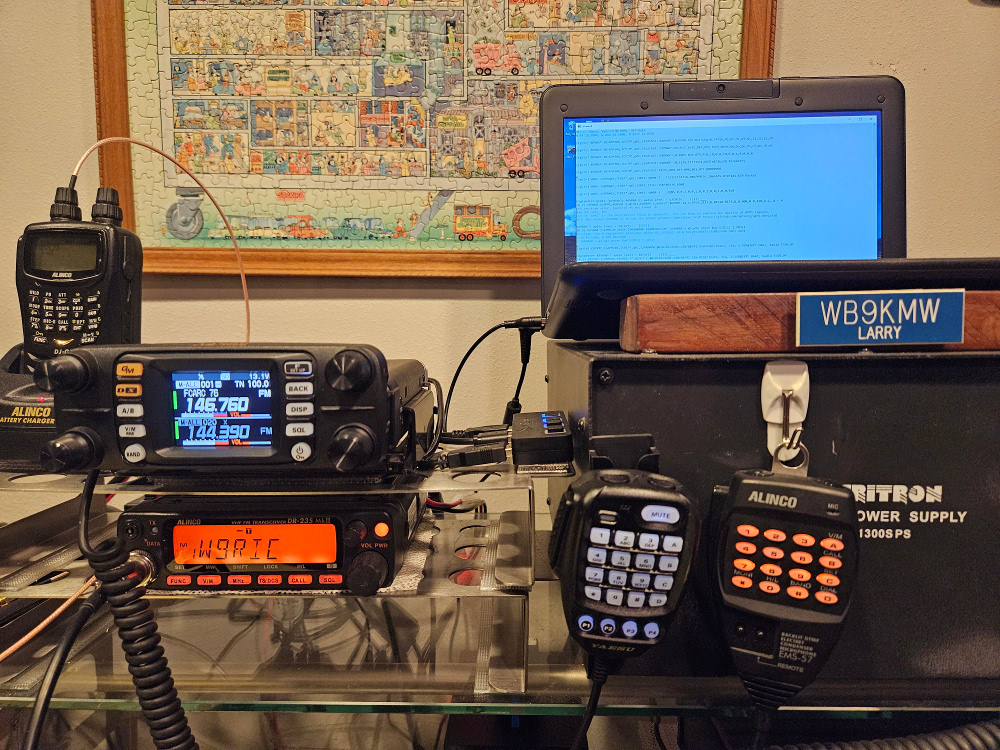
Larry is active on 6 metres, 2 metres, 125 centimetres, 70 centimetres, 902 MHz and 1296 MHz. His operating includes SSB, CW and FT8, as well as local FM and Fusion nets.
He also runs an APRS iGate around the clock.
Keeping the Past Alive
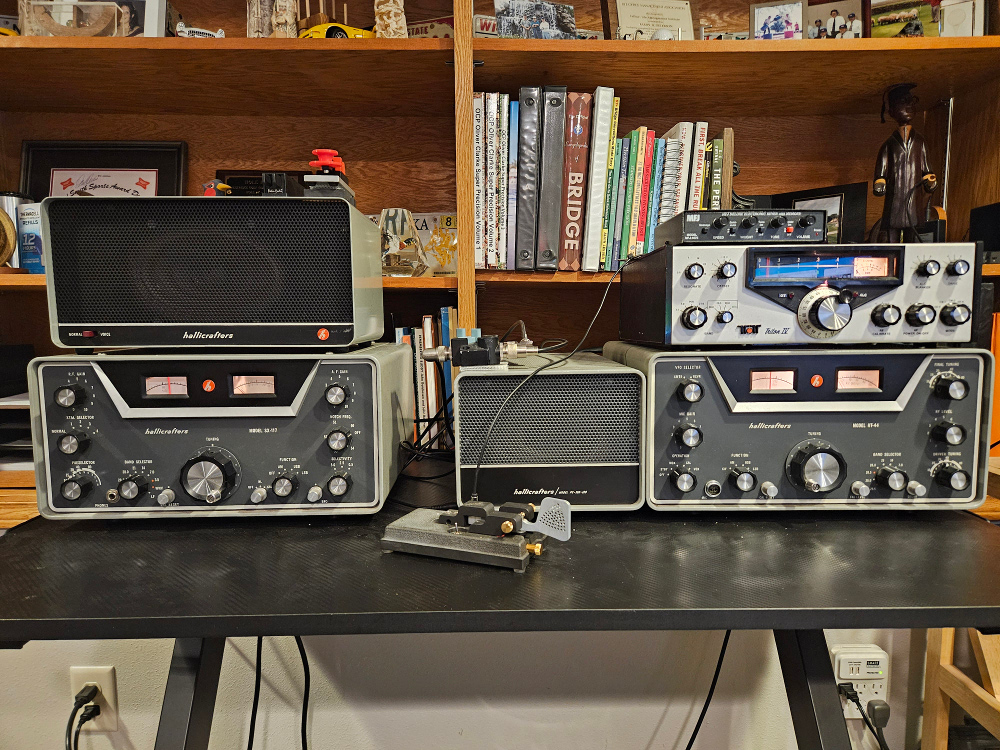
Some equipment in Larry's shack is there for more than performance. It is there because radios can carry memories.
A high-school friend who helped draw Larry into amateur radio in the 1960s owned a Hallicrafters receiver. Today Larry has a Hallicrafters SX-117 receiver with its matching HT-44 transmitter.
His very first receiver, the Hammarlund HQ-110, is no longer with him, but Larry later acquired a working Hammarlund HQ-170A.
He also remembers the Ten-Tec Triton IV from the 1970s, an early solid-state radio from another era of the hobby.
For Larry, vintage equipment is not simply old hardware. It is a physical connection with the path that brought him here.
Portable Radio and POTA
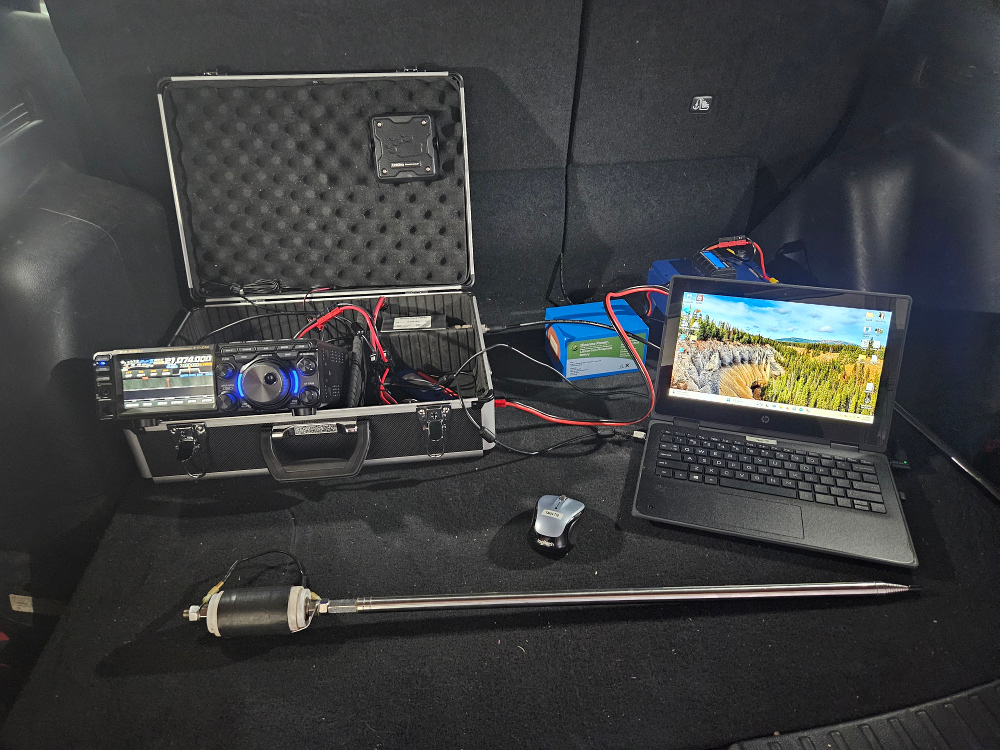
Larry is also a prolific Parks on the Air activator. His portable setup features a Yaesu FT-710, and he often operates FT8 on 20 metres while in the field.
There is a pleasing symmetry in that. The station may now include a modern transceiver and laptop, but the basic idea is familiar: take a radio, put up an antenna and see who is out there.
Into the Gigahertz
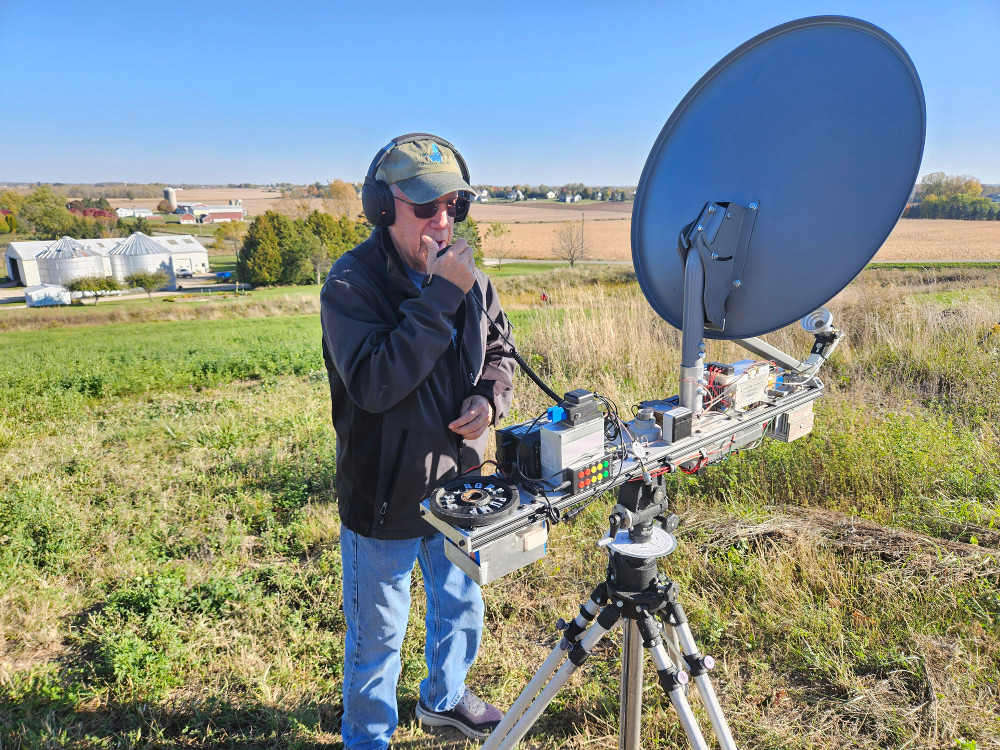
Perhaps nothing shows the scale of Larry's amateur-radio journey better than his work on the microwave bands.
In 1963 his first transmitter was fixed to a crystal around 3.7 MHz. Today he can be found working frequencies measured in gigahertz.
Larry is active in the ARRL 10 GHz contest and also operates during the warmer months, sometimes taking advantage of rain-scatter propagation.
His normal microwave activity is on 10 GHz, with the ability to work stations on 24 GHz during contests.
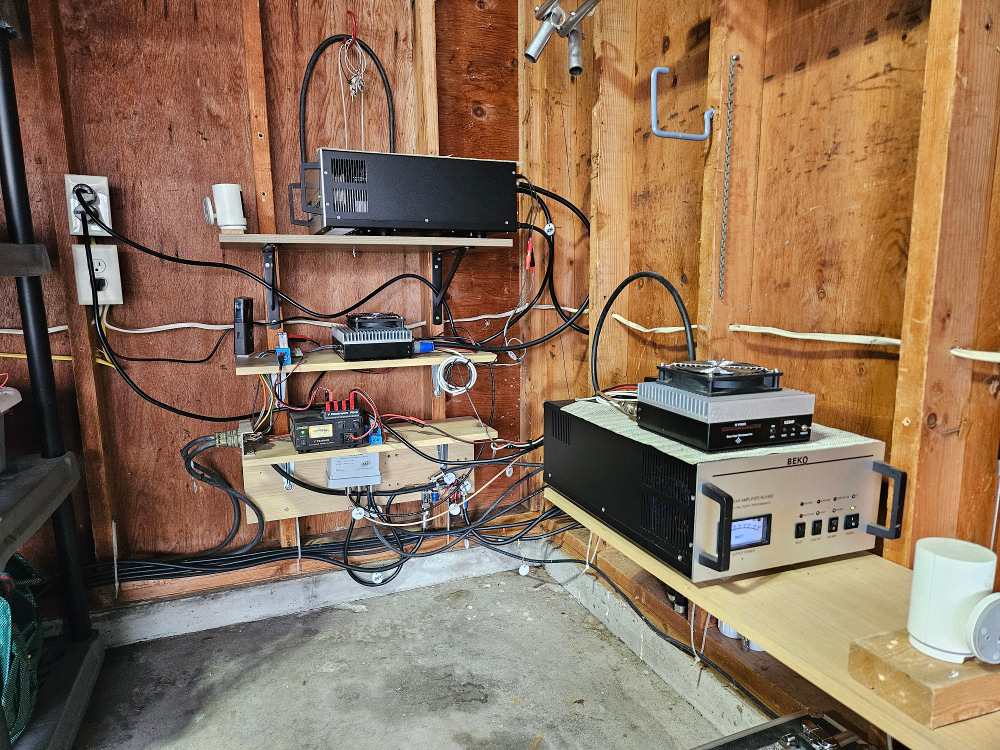
More than six decades after building his first CW transmitter, Larry is still experimenting at the edge of amateur-radio technology.
The frequencies have changed enormously. The curiosity has not.
The Antenna Farm
Years of operating taught Larry one lesson repeatedly: the radio is only part of the station.
The antenna system matters enormously.
His station includes dedicated directional antennas for 6 metres, 2 metres, 125 centimetres and 70 centimetres mounted above his HF Yagi. His microwave equipment is positioned with the same philosophy in mind: keep feedline losses as low as practical and give every signal the best possible chance.
It is the kind of knowledge that does not come from a single manual. It comes from years of listening, trying, changing things and trying again.
Beyond One Mode
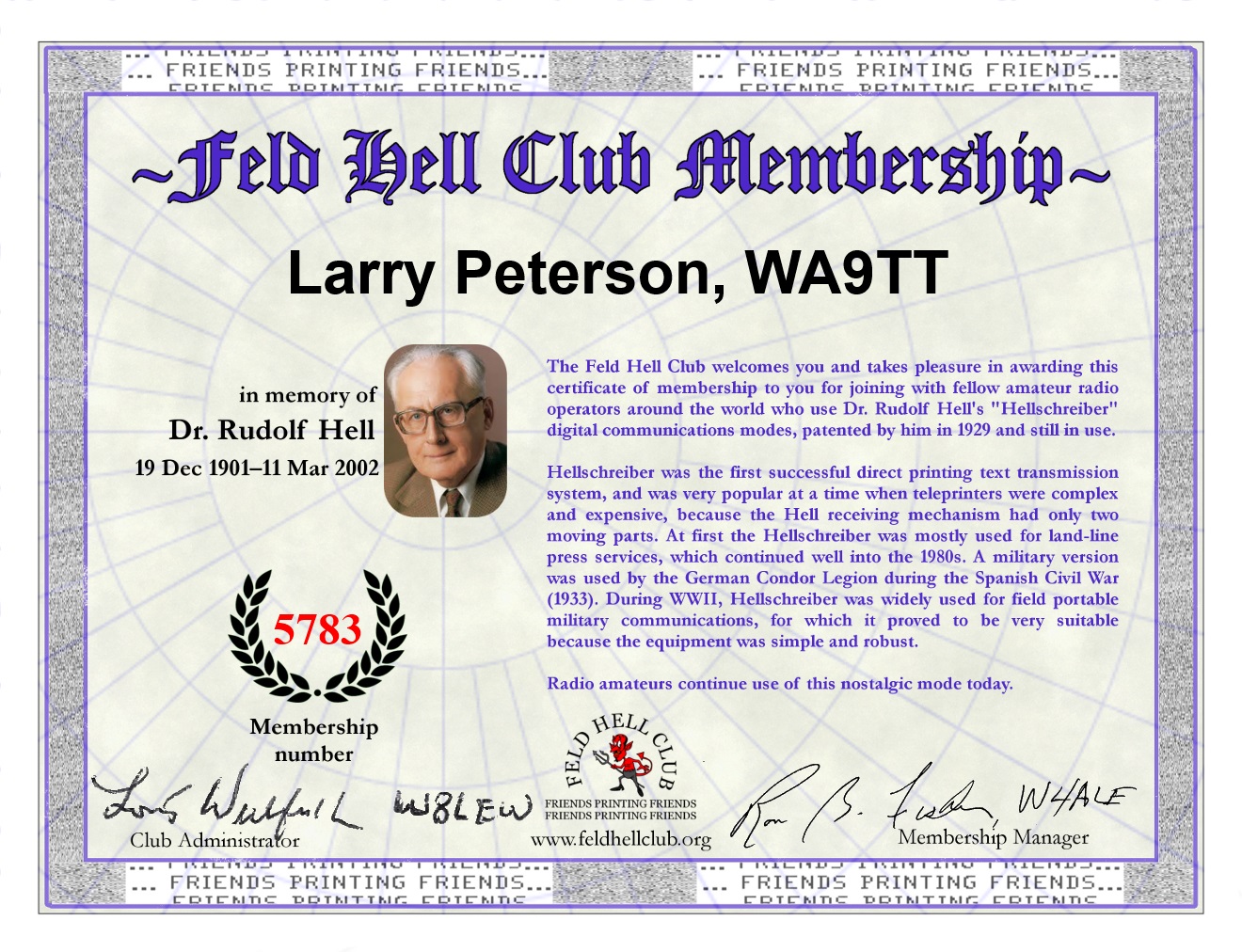
Larry's interests also include modes with their own long histories. His Feld Hell Club membership connects him with Hellschreiber, developed by Rudolf Hell in the early twentieth century.
And Morse code — the skill that once stood between a twelve-year-old Nebraska boy and his first amateur licence — never disappeared from his life.
Friendship Through SSTV — Remembering Gary G7SLL
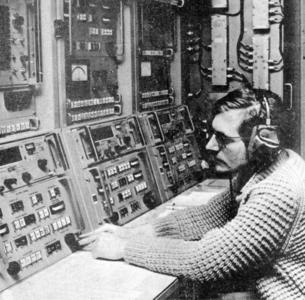
Amateur radio is built around technology, but its lasting memories are often about people.
Larry met Gary Peach, G7SLL through an SSTV QSO on 20 metres.
What began as a radio contact introduced Larry to Gary's fascinating career and the many remarkable things he had accomplished.
Gary passed away on December 16, 2019.
“Gary accomplished many brilliant things throughout his career. He will be greatly missed.”
— Larry Peterson, WA9TTIt is a small example of something every long-time radio amateur knows: sometimes the most important thing carried by a radio signal is not information at all.
It is friendship.
Developing the P-Signal Reporting System
One of Larry's most important contributions to Slow Scan Television is the development of the P-signal reporting system.
Traditional reports such as RSV or reports like 595 are familiar within amateur radio, but they do not always describe what an SSTV operator actually sees on the screen. A picture may contain noise, interference, fading, sync problems or loss of detail while a conventional signal report still appears quite good.
Larry wanted a reporting method that was more closely related to the quality of the received SSTV picture itself. Developing the P-system involved substantial statistical analysis together with numerous on-air tests to compare reports with what operators were actually seeing.
Larry's work on the P-signal reporting system was published in the January 2017 issue of CQ Magazine and was later included in the ARRL Handbook. The system has gradually gained wider use, particularly among SSTV operators in North America.
The goal was simple but important: give the transmitting station a report that actually tells something meaningful about the picture that arrived.
SlowscanTV has a separate guide explaining the P-system, the P1–P5 picture scale and how it compares with traditional RSV reporting. Read the SSTV Signal Reporting guide →
Still on the Air
More than sixty years after his first nervous CW contact, Larry Peterson, WA9TT, is still on the air.
The radios have changed. Frequencies that once seemed exotic are now part of normal operating. Computers sit beside transceivers. Digital modes share space with CW, SSTV and voice. Microwave dishes have joined the traditional antenna farm.
But the curiosity that brought a twelve-year-old farm boy to amateur radio in 1963 is still there.
Larry still listens. He still experiments. He still gets on the air. And he still shares what he has learned with others.
This is Ham Radio Heritage: not only preserving the equipment and signals of yesterday, but preserving the stories of the people who carried the spirit of amateur radio from one generation to the next.
SlowscanTV thanks Larry Peterson, WA9TT, for sharing his memories, photographs and more than six decades of amateur-radio history with us.
Continue Exploring
Larry maintains an extensive collection of SSTV information, receiving cameras, tutorials and amateur-radio material on his own website.
Photo Credits & Copyright
Photographs, QSL cards and personal memorabilia from the collection of Larry Peterson, WA9TT, are reproduced on SlowscanTV with his permission. Copyright remains with Larry Peterson and the respective original copyright holders where applicable.
Story based primarily on Larry Peterson's own account provided to SlowscanTV, together with material he has published on his personal website.