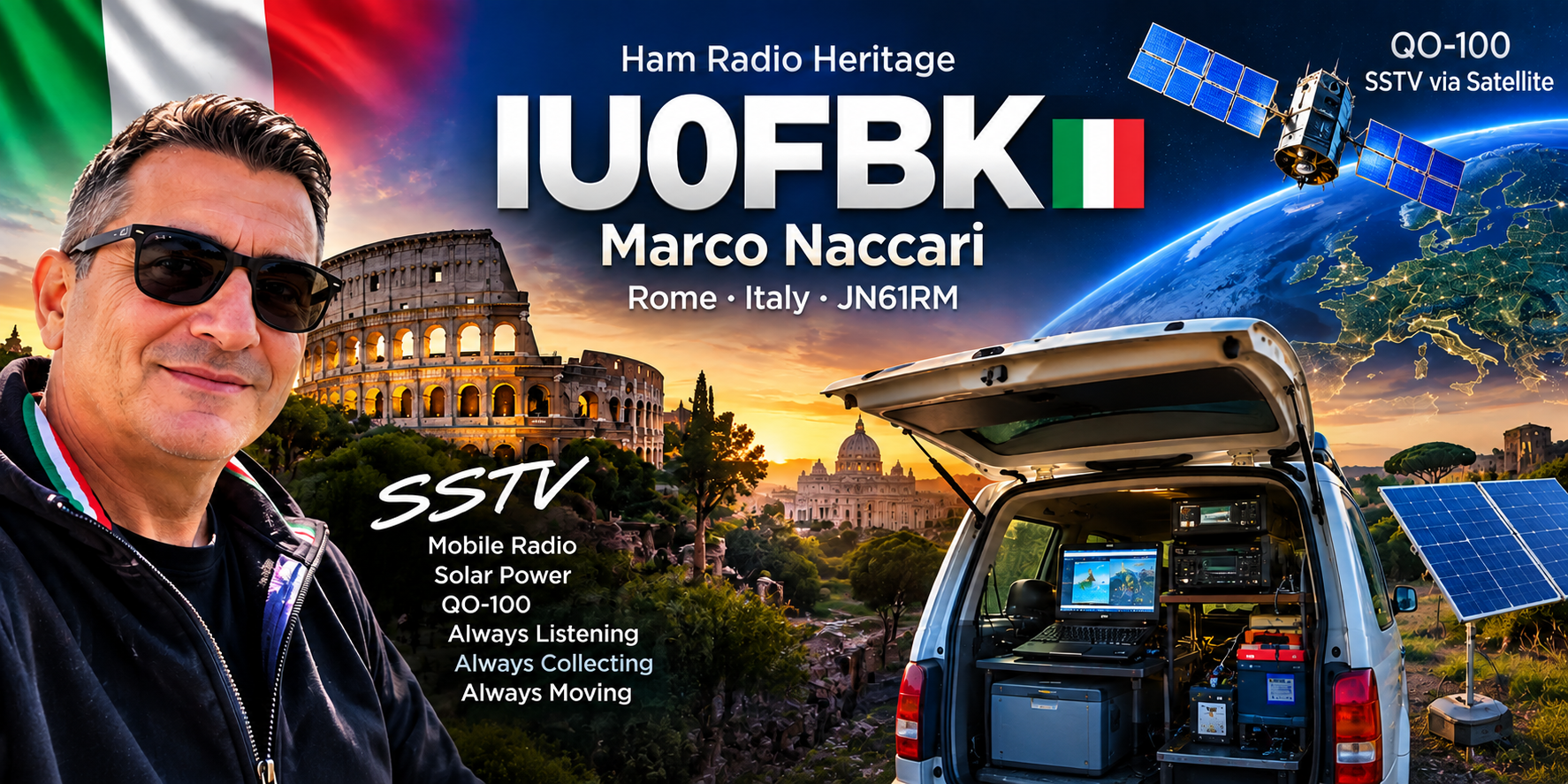
Ham Radio Heritage
Marco Naccari, IU0FBK
Mister SSTV — From Continuous Reception to Solar-Powered Mobile Radio
From a continuously listening 20-metre SSTV station in Rome to a huge online image archive, automatic FSKID identification and a compact mobile station powered by batteries and solar panels — Marco Naccari, IU0FBK, has built SSTV into something that is always listening, always collecting and always moving.
A Callsign Seen Again and Again
Anyone who regularly watches 20-metre SSTV has a good chance of coming across IU0FBK.
Marco is based in Rome, Italy, and his station has become a familiar part of the international SSTV scene. His interest is not limited to making an occasional contact. He has built systems around SSTV: receiving it continuously, identifying stations, storing pictures and making the results available online.
That combination of amateur radio and automation is at the heart of his Mister SSTV project.
Keeping 20 Metres Under Watch
At home, Marco uses a Yaesu FT-991A as part of his SSTV station. The receiver keeps watch on the international 20-metre SSTV activity around 14.230 MHz, allowing pictures to be received and processed without somebody having to sit in front of the radio all day.
For Marco, the received image is only the beginning. Once a picture arrives, the surrounding information can also be captured and stored.
SSTV becomes much more interesting when the picture, callsign, time and history can all be connected.
Mister SSTV and FSKID
Marco's Mister SSTV archive on Diplomiradio has grown into a remarkable collection of received pictures.
The system makes use of FSKID, the identification information that can be transmitted together with an SSTV image. When a valid identifier is decoded, it can be linked to the received picture together with the date and time.
This turns a folder full of pictures into something much more useful: a searchable record of SSTV activity and the stations heard over time.
By August 2026, Marco's public Mister SSTV database had already passed 150,000 received images.
SSTV That Leaves the Shack
One of the most distinctive parts of Marco's radio activity is his mobile SSTV station.
Instead of keeping everything permanently installed at home, Marco has turned a very small car into a practical field station. A mast can be erected beside the vehicle, radios and a computer are carried inside, and power is provided independently.
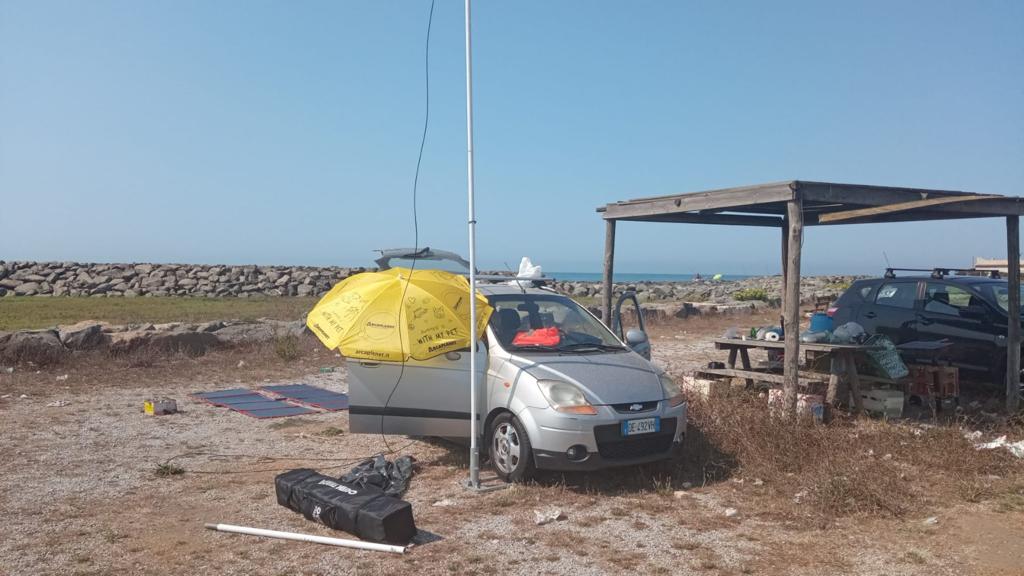
Power from Batteries and the Sun
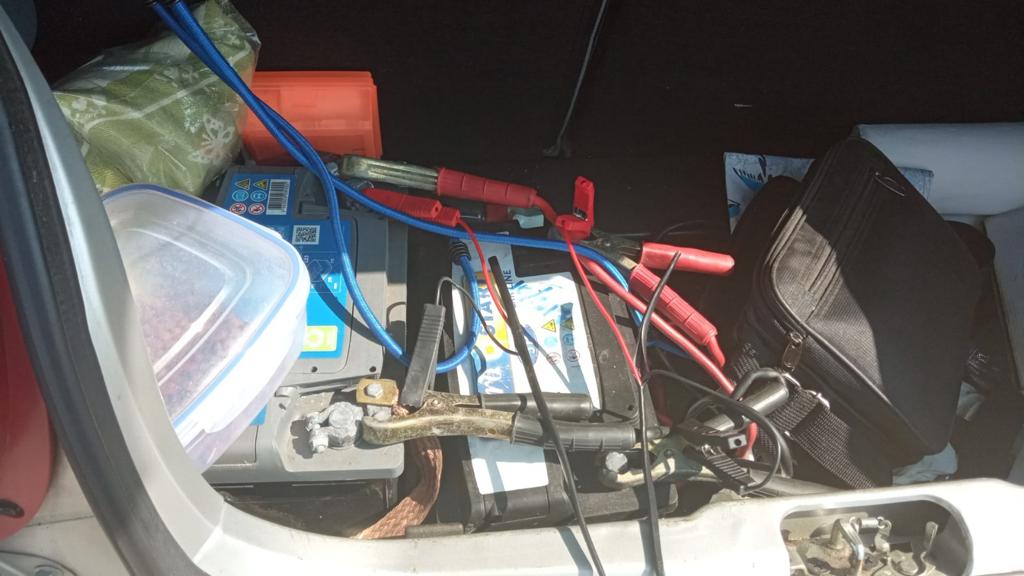
A field station is only useful while it has power. Marco therefore built his mobile setup around three batteries and portable solar charging.
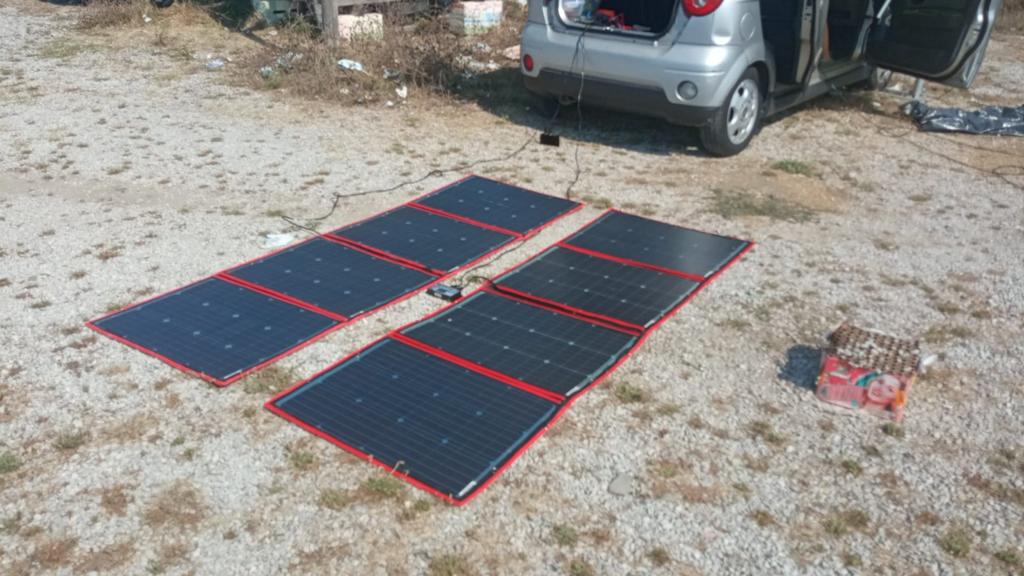
Two folding solar-panel sets can be deployed beside the car, allowing the batteries to be supported during longer periods of operation without depending entirely on mains electricity.
A Complete Radio Station in a Small Car
The photographs show how much equipment Marco has managed to fit into a compact vehicle. The station includes multiple radios as well as a computer used to control, monitor and operate the station.
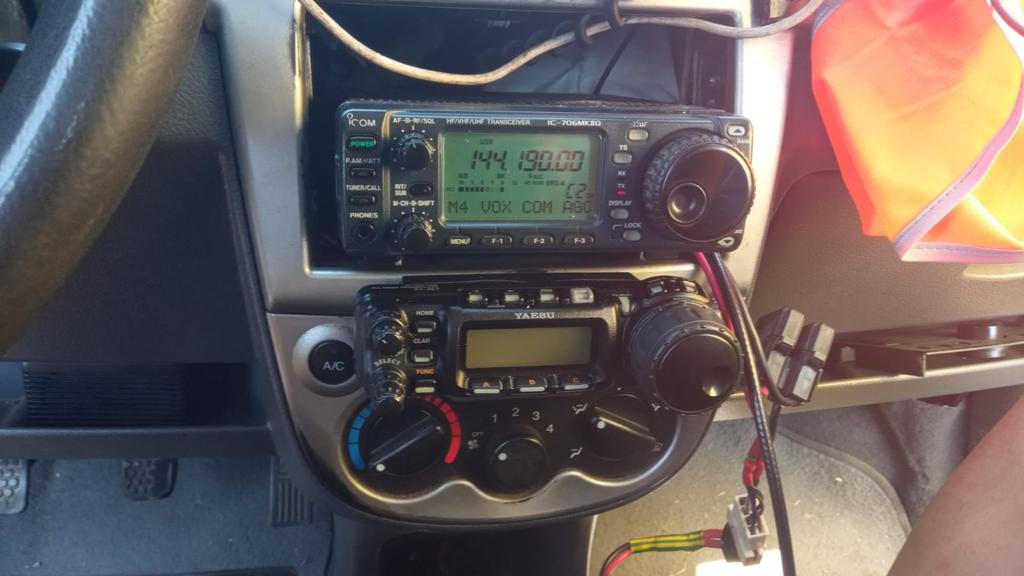
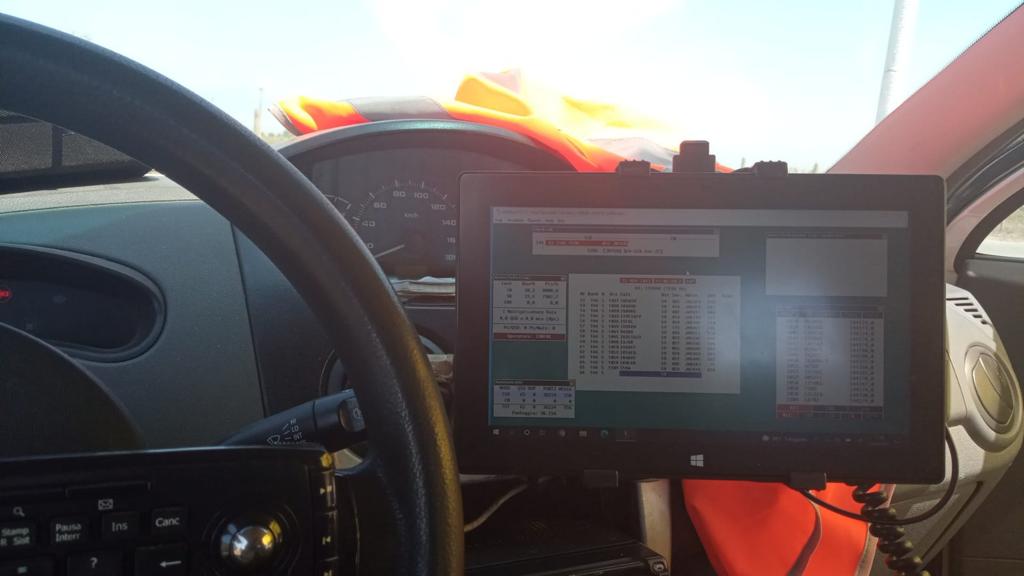
It is a practical example of the experimental side of amateur radio: use what fits, build around the available space, solve the power problem and take the station where you want to operate.
From HF to QO-100
Marco's interests extend beyond the familiar 20-metre SSTV frequency. His mobile activity covers different bands, and he has also taken his radio experimentation to QO-100, the geostationary amateur-radio transponder on Es'hail-2.
That is a natural extension of the same idea behind the rest of his station: SSTV and digital radio do not have to remain tied to one radio, one antenna or one operating position.
The SlowscanTV Connection
IU0FBK is also one of the stations followed by SlowscanTV. Marco's continuous reception contributes a steady stream of received SSTV pictures and gives a useful view of what is happening on 20 metres over time.
In that sense, Marco's own work and SlowscanTV share the same basic idea: an SSTV picture is more valuable when it is not simply displayed once and lost, but preserved as part of the history of activity on the band.
Continue Exploring
Marco's Mister SSTV archive can be explored on Diplomiradio, while his current 20-metre activity can also be followed through SlowscanTV.
Photo Credits & Copyright
The photographs on this page were kindly provided by Marco Naccari, IU0FBK, for his Ham Radio Heritage story. Copyright remains with the original owner. Images may not be reproduced, copied or republished without permission.
Story based on information shared by Marco with SlowscanTV and material from his Mister SSTV project on Diplomiradio.