SlowscanTV Story
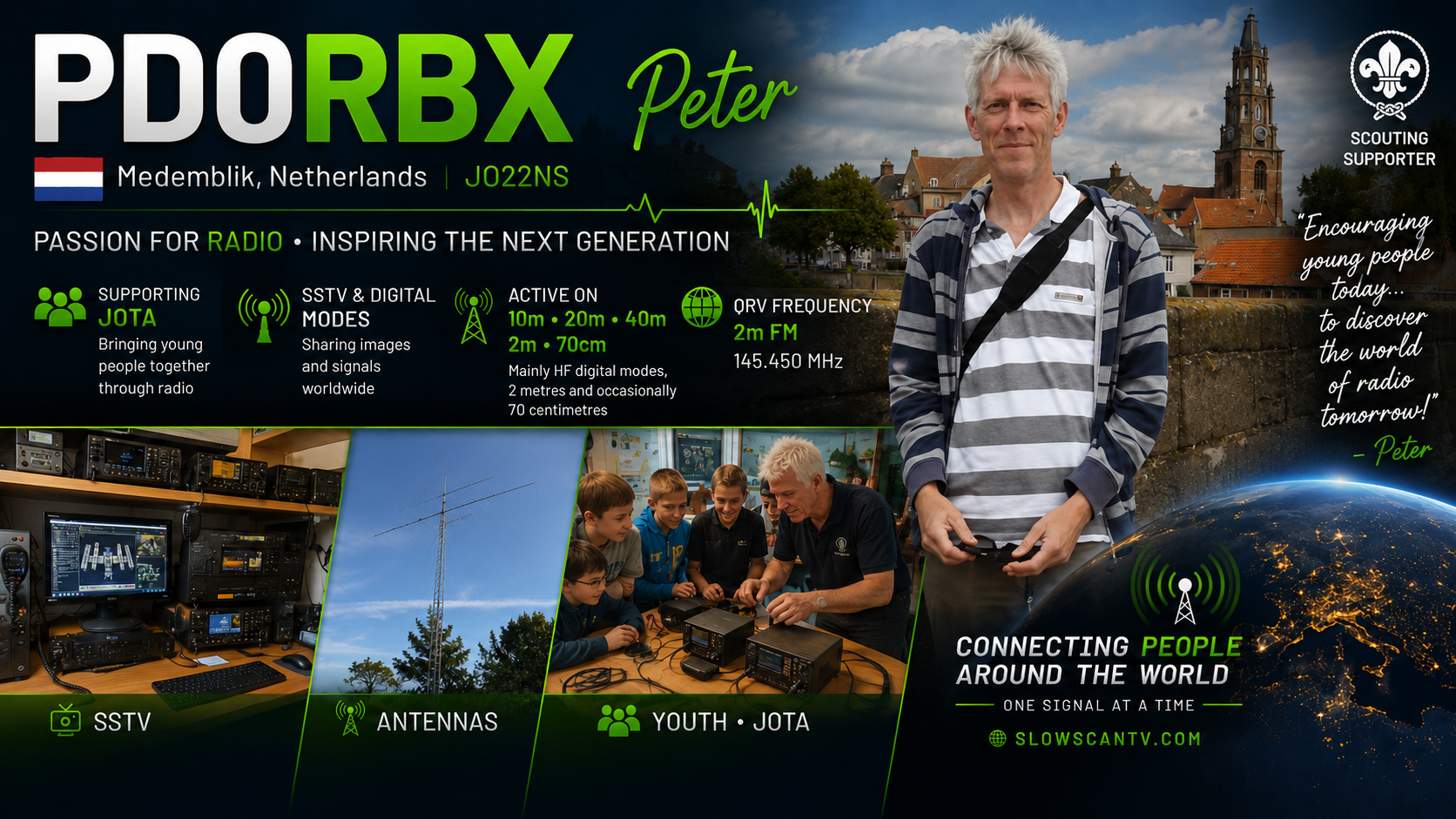
Peter, PD0RBX – Keep the Spirit Alive
From home-built transmitters and packet radio to SSTV and JOTA: a story about curiosity, experimentation and doing things differently.
The first radio years
Peter’s interest in radio began during the 1980s. Like many radio enthusiasts of that period, he experimented on the 11-metre and 3-metre bands and built his own transmitters and antennas.
After several transmitters were confiscated, he decided that it was time to take the official route and obtain the Dutch D-class amateur radio licence.
That decision did not end the experimenting. It gave him even more opportunities to continue learning, building and testing new ideas within amateur radio.
Packet radio and computers
By the end of the 1990s, Peter was already active with packet radio. He gained practical experience connecting modems, transceivers and computers.
Packet radio showed him that a radio transceiver and a computer could work together to exchange information in a completely different way from an ordinary voice contact.
That experience would later make SSTV feel familiar. Once again, a radio was connected to a computer and sounds from the receiver were transformed into something meaningful.
Returning to amateur radio
When Peter returned to the hobby in 2012, he met other radio amateurs in and around Medemblik.
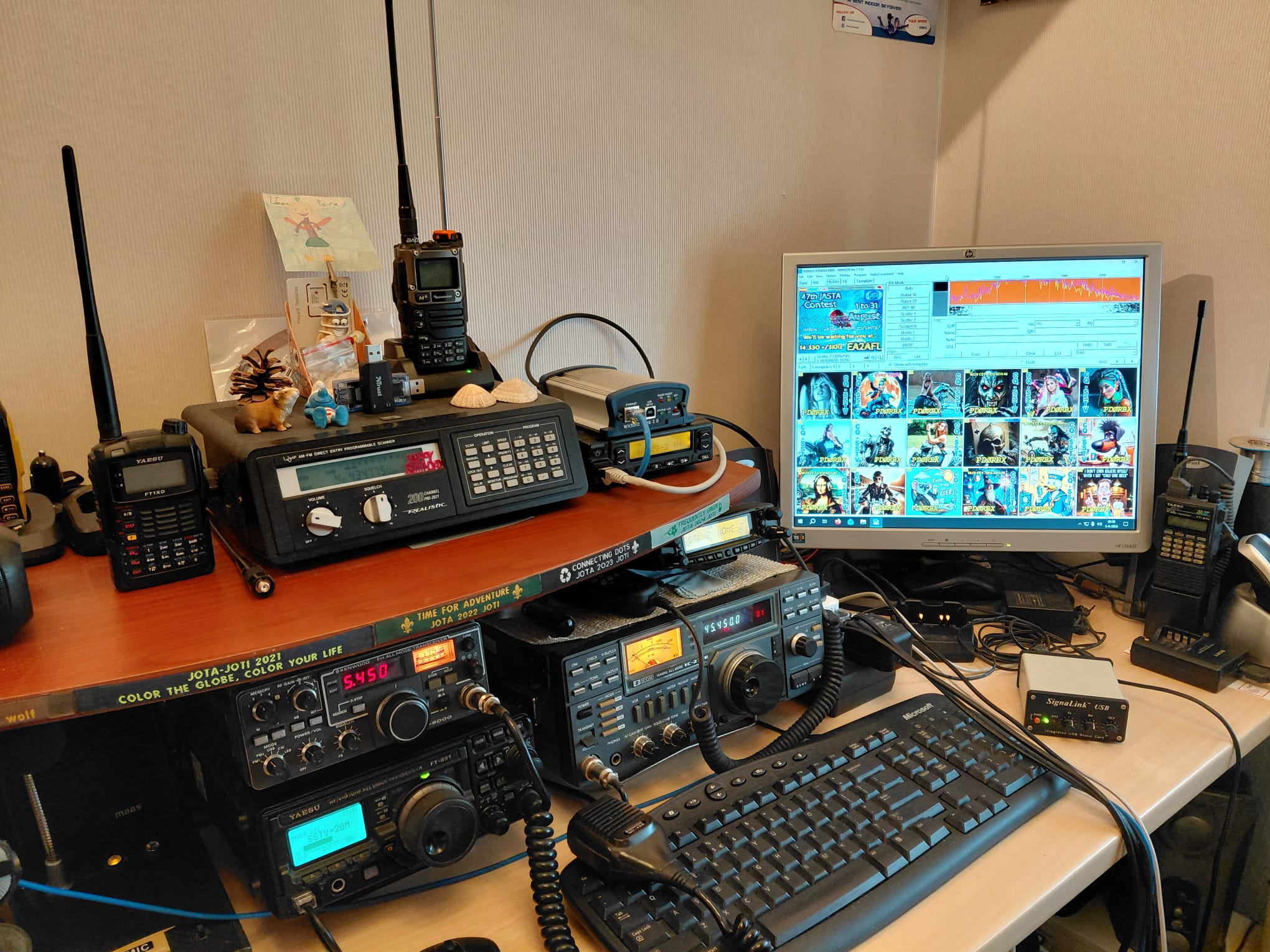
One of them was Frits, who had been very active with SSTV during his own radio years. Frits introduced Peter to Slow Scan Television and showed him how pictures could be transmitted using amateur radio.
I saw it as a challenge to connect a transmitter to a computer, just as I had done with packet radio, and turn those whistling tones and sounds into an image.
The technical challenge immediately appealed to him. SSTV combined radio, computers, sound, pictures and creativity in one mode.
SSTV comes and goes
Peter does not pretend that SSTV is active in his shack every day. Sometimes there are periods of several months when he does very little with the mode.
Then good propagation appears, interesting SSTV pictures are seen online, or he finds photographs that would work well in a transmission. That is often enough to switch everything on again.
There are relatively few local SSTV operators in his area, but that makes good propagation even more enjoyable. When the band opens, familiar and enthusiastic SSTV operators can suddenly be seen and heard again.
Creating the image is part of the contact
For Peter, SSTV is not only about pressing the transmit button. Preparing the picture is an important part of the hobby.
He creates templates, crops photographs and tries to turn every image into something personal before sending it over the air.
The picture itself becomes part of the radio contact: a small creation made especially for the moment, the station and the people who may receive it.
Showing SSTV during JOTA
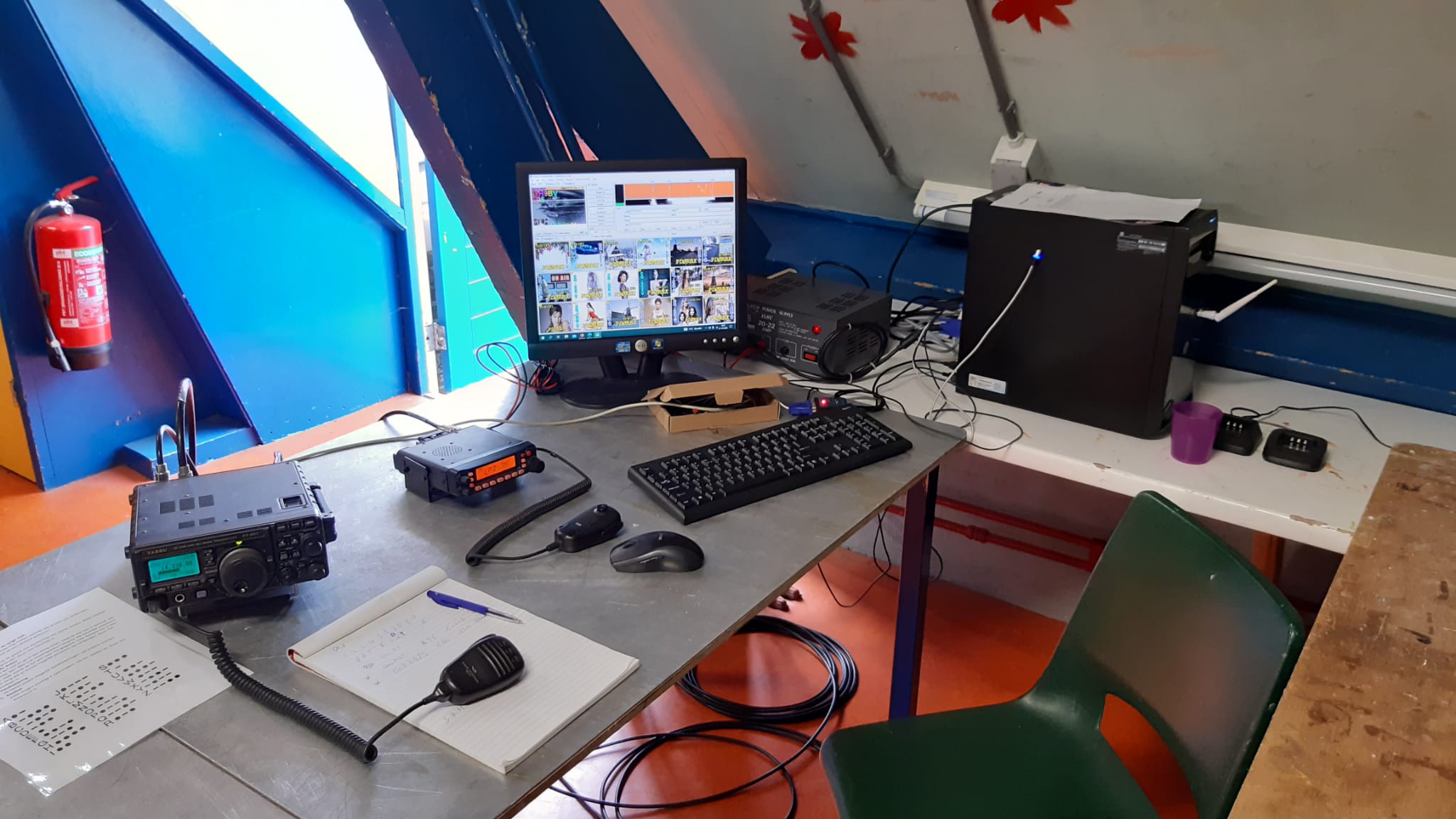
Peter also uses SSTV during JOTA – Jamboree On The Air.
Whenever possible, he takes photographs during the JOTA activities, processes them immediately and transmits them over amateur radio.
Young people are completely familiar with sharing photographs through WhatsApp. Discovering that a picture can also be sent through an amateur radio transmitter often produces surprised reactions.
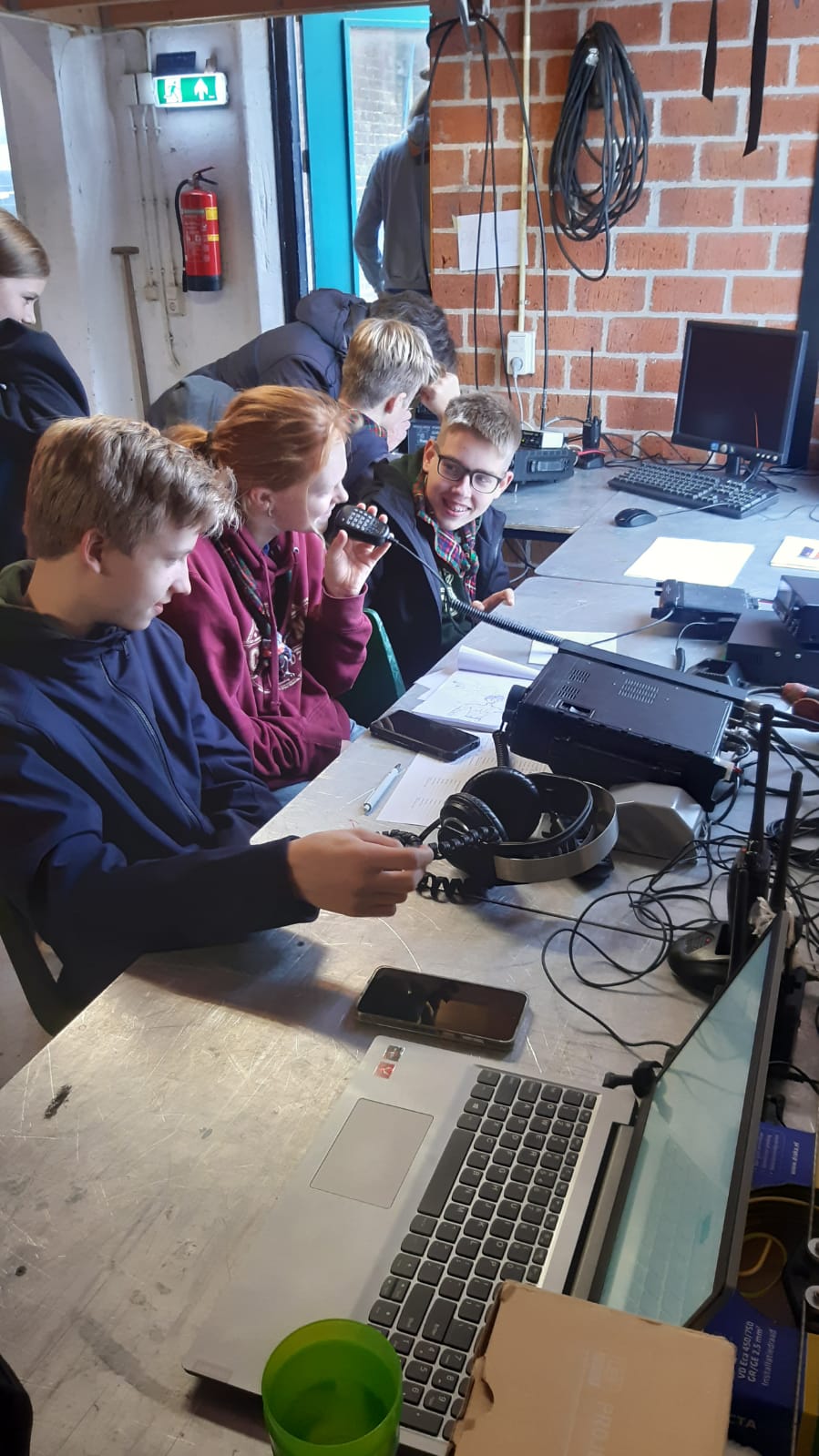
They know how to use WhatsApp perfectly well, but when they discover that a picture can also be sent through an amateur radio transmitter, their reaction is pure gold.
That moment demonstrates the value of amateur radio. It shows that communication does not have to depend on the familiar systems people use every day.
Why make it easy?
Peter’s story captures an important part of the amateur radio spirit. Radio amateurs often choose to build, connect and experiment even when an easier modern solution already exists.
The purpose is not always efficiency. The purpose is to understand how something works, discover what is possible and enjoy the process of making it work.
Why make it easy when it can also be done the difficult way — or simply a different way?
Keep the spirit alive
From home-built transmitters and packet radio to digital modes, SSTV and JOTA, Peter has continued to follow the same basic principle: remain curious and keep experimenting.
By showing a new generation that pictures can travel through the air without a mobile phone network or social media platform, he helps keep the real experimental spirit of amateur radio alive.